
Radhita Zahratul Jannah Am
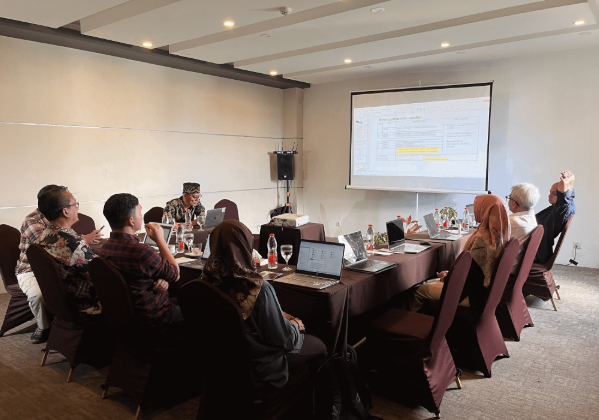
The Inter-Religious Studies (IRS) Doctoral Program at Universitas Gadjah Mada (UGM) began the new month with a productive session, holding a workshop to discuss its new curriculum on Wednesday, July 1, 2026. The workshop was led by Dr. Agus Wahyudi, Head of the Study Program. In his opening remarks, Dr. Agus Wahyudi highlighted two key issues to be addressed: how to increase the visibility of the research-based doctoral track (by research), and how to design a curriculum structure that is genuinely applicable to students from diverse academic backgrounds. Curriculum renewal of this kind is not new to the study program. The forum agreed that such discussions have become a regular tradition within IRS UGM, conducted periodically to ensure the program remains responsive to ongoing developments.
At the beginning of the discussion, the Academic Coordinator of the IRS UGM, Hendrikus Paulus Kaunang, S.Fil., M.A., explained that one of the primary motivations for redesigning the curriculum was the need to respond to emerging issues in the field of interreligious studies. These include contemporary challenges such as the rapid development of artificial intelligence (AI), the climate crisis, and escalating global geopolitical tensions. In addition to addressing these evolving academic concerns, the curriculum revision is also intended to respond to national higher education policies concerning doctoral programs. In particular, the program seeks to address issues related to the duration of doctoral studies and the rate of on-time graduation, both of which have become important indicators in the government’s assessment of the quality and performance of graduate study programs.
Among the key matters discussed was the structure of the study load. Dr. Zainal Abidin Bagir explained that the proposed curriculum consists of three compulsory courses and three elective courses, a structure that does not differ significantly from the previous one. He noted, however, one important point that the elective course titled Religion and Contemporary Issues will continue to be discussed further in accordance with students’ evolving interests. Several themes have emerged as potential future topics, including religion and ecology, religion and digital society, faith and food, and religion and disaster, reflecting the program’s ongoing effort to remain responsive to contemporary religious issues. Student perspectives were also taken into account, drawing on the results of a previously conducted survey. In line with the objective of the curriculum discussion, namely to align the interests of all relevant parties, including students, lecturers, the study program, and the faculty, the curriculum development process incorporates student feedback, particularly regarding the Research Method and Design course, with the aim of allowing students more time for discussion and for reviewing the depth of their research.

The workshop further addressed the possibility of allowing students greater flexibility to take courses across the Graduate School. This openness to cross-program enrollment reflects the program’s continued commitment to aligning the curriculum with students’ diverse academic interests, rather than confining them to courses offered solely within their own study program. As highlighted by Dr. Dicky Sofjan during the discussion, the proposed curriculum is designed not only to serve students within the program but also to be accessible to students from other graduate programs, including the Master of Religion and Cross-Cultural Studies (CRCS). Such an approach builds upon an existing practice that has already proven successful, particularly through the Study of Religions: Classical and Contemporary Theories course, which has frequently been attended by students from different study programs.
A further concern raised by Dr. Leonard Chrysostomos Epafras was the tendency of a considerable number of students to remain at the comprehensive examination stage for an extended period, for a variety of reasons. This issue was identified as one of the primary considerations underlying the development of the new curriculum. According to him, the new curriculum is designed to support students through this stage more effectively, rather than introducing additional administrative or academic obstacles that could further prolong their studies. The forum also discussed the overall structure of dissertation-stage courses, from preparation for the comprehensive examination through to the final dissertation defense, as a single, coherent pathway that should be designed more clearly and systematically for students.
With the technical matters discussed in this workshop, IRS UGM is now in the process of finalizing its curriculum draft. A number of detailed decisions, ranging from the structure of the research methods course, to cross-program flexibility, to the restructured pathway toward the dissertation examination, are expected to address longstanding challenges faced by students, while ensuring that the doctoral program remains relevant and competitive going forward.