
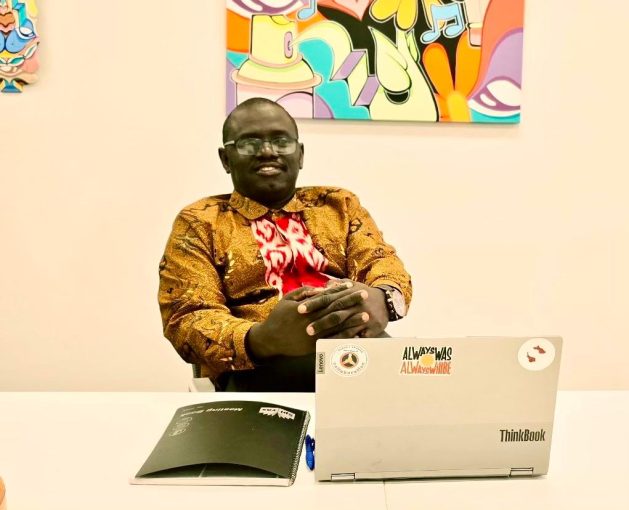
This interview features Dr. Ebrima Sarr, an international student from Gambia (class of 2012) and alumnus of the IRS UGM, who serves as Senior Manager at the Australian African Foundation for Retention and Opportunity (AAFRO). The interview, conducted between Dr. Sarr and Hendrikus Paulus Kaunang from IRS UGM, reflects on his journey, personal and professional growth, and the impact of interreligious studies on engagement and social cohesion. He completed his studies with a dissertation titled “The Phenomenon of Slawatan: Contemporary Islamic Ritual Perform by Habib Syekh and Four Organizations [2012–2015].”
Congratulations on your appointment as Senior Manager at the Australian African Foundation for Retention and Opportunity. Could you share a bit about your professional journey after completing your doctoral studies in the Inter-Religious Studies program at UGM?
First of all, I would like to express my sincerest gratitude and highest appreciation to the IRS UGM for allowing me to enroll and complete the PhD program in Inter-religious Studies (IRS). Following my doctoral studies in IRS UGM, I developed a great interdisciplinary foundation. The program improved my analytical capabilities, evidence-based research skills, and understanding of religious diversity in multicultural societies in Indonesia, The Gambia and Australia. An important aspect in my view at that time was reading and engaging with Totemic religions in Australia, which was one of the reasons that inspired me to move to Australia and connect directly with Aboriginal communities and have a better understanding of these Totems. This changeover allowed me to incorporate academic excellence with community work, advancing cultural gratitude, respectful dialogue, and inclusive engagement in both policy and professional environments.
How did your experience in the IRS doctoral program shape your perspectives on interreligious dialogue, social inclusion, and community engagement in your current role?
The IRS doctoral program advanced excellent academic research combined with respectful engagement with diverse religious and cultural perspectives, shaping my technique to inter-religious dialogue, social cohesion, and community engagement. Social cohesion is an integral part of human life, and inter-religious dialogue convened at IRS UGM is a catalyst for advancing this process. In my role as a senior manager and social work practitioner at the Australian African Foundation for Retention and Opportunity (AAFRO), these establishments shape my service delivery to children, young people and families from culturally and linguistically diverse backgrounds. They allow me to navigate complex social, cultural, and religious issues, build trust, and implement inclusive, person-centered programs that yield measurable outcomes. The program highlighted that respect for dialogue, inclusion, and cultural competence are important parts of human life, promoting social cohesion, equitable access, and improved mental health and well-being outcomes.
Your work involves engaging with diverse communities. In what ways has your academic training in interreligious studies helped you navigate cultural and religious diversity in your professional environment?
My Inter-religious studies academic training improved my capacity to engage with culturally and religiously diverse communities. The program cultivated critical thinking, cross-cultural experience, and the ability to facilitate respectful, informed dialogue. In practice, these skills underline my work with diverse communities, supporting inclusive and responsive service delivery. Moreover, the training allows me to navigate complex cultural and religious issues with sensitivity, strengthen trust, and provide equitable outcomes. This groundwork increases my ability to promote social cohesion and collaborative commitment within diverse community and professional environments.
Could you share specific skills or insights you gained during your doctoral studies that have been particularly valuable in your leadership position today?
The IRS UGM developed my leadership skills in navigating differences and advancing productive conversations. I learned to transform diverse perspectives into shared priorities for social change through cooperative action. As a senior manager at the Australian African Foundation for Retention and Opportunity (AAFRO), these skills inform strategic planning, policy direction, and stakeholder engagement. It supports a culturally responsive service approach, broad decision-making, and systems-level change. Moreover, this establishment permits me to guide our team, partners and communities we work with regarding collaborative, sustainable outcomes that mirror the needs and hopes of children, young people and families from diverse backgrounds while advancing social cohesion and equity.
Looking back, were there particular courses, research experiences, or academic mentors in the IRS UGM that significantly influenced your career path?
My university professors and gurus in the IRS UGM profoundly shaped my professional and leadership path in Indonesia, The Gambia and Australia. I remember Ibu Siti Syamsiyatun and Pak Dicky Sofjan, who inspired me to complete my Ph.D., emphasising resilience and strategic focus. I remember that while I was away for a long time, one day Pak Dicky, who was my second supervisor, sent me a really impactful text message. It created a spark in my mind to have a deep reflection about my future and career as an academic scholar of religion and a social work practitioner. Eventually, I returned to Indonesia to complete my studies after being away in Brunei, Hong Kong and later Australia for 3 years. The other lecturers fostered critical analysis and evidence-based research and decision-making, while Prof. Sahiron Syamsuddin, who was my main supervisor, ensured I achieved tangible outcomes by completing my dissertation and graduating from Gadjah Mada University. Peer advice from Mas Erich Kaunang, who was my classmate at the Global Campus Tokyo University of Foreign Studies online Peace Studies program and also an academic coordinator at the IRS UGM, further encouraged me to commit to completing the PhD program. Together, their guidance inculcated a sense of belonging, determination, thoughtful thinking, and cross-cultural awareness skills, which I now use in leading community initiatives, developing inclusive policies at the Australian African Foundation for Retention and Opportunity (AAFRO), and guiding social change strategies with measurable societal impact in Australia and on the Smiling Coast of Africa.
In your current role, you are contributing to community development and inclusion. How do you see the relevance of interreligious studies in addressing contemporary global challenges?
My academic background in Inter-Religious Studies allows me to engage efficiently with individuals and communities holding different worldviews, promoting respectful conversation and reciprocal understanding in my current role as a Senior Manager and Social Work practitioner at the Australian African Foundation for Retention and Opportunity (AAFRO). For instance, the Interreligious Studies program provides me with an understanding of promoting social cohesion, resilience, and inclusive communities, which is essential in addressing global challenges such as radicalism, discrimination, and cultural misunderstanding. For example, the IRS program introduced in Indonesia post-Bali bombings has shown how inter-religious dialogue can build respect, unity, and collaboration. Such understandings are clearly applicable to Australian policy priorities, supporting social cohesion and culturally responsive practice to strengthen unity and community resilience post Bondi in Sydney. Moreover, currently, I am helping organize a collaborative international cultural festival in the Smiling Coast of Africa that will bring diverse groups from Australia, Sweden, The Gambia, and Senegal to promote cultural diplomacy. In the future, I hope to include Indonesia as part of this cross-cultural celebration. For us, this is part of our contribution to community development and inclusion, a skill I learnt during my time in Universitas Gadjah Mada.
What message or advice would you like to share with current students and future scholars in the IRS UGM who aspire to create meaningful impact in society?
To current and future IRS’s PhD students, I encourage them to be proud of joining a group of people who have dedicated their lives to academic excellence at Universitas Gadjah Mada. I would like to advise them that the program offers a unique opportunity to engage deeply with diverse religious, cultural, political, and social perspectives, advancing critical thinking and social change. I urge them to use this program for learning and sharing of knowledge, promote inter-religious and cross-cultural dialogue, and transform academic excellence into substantial communal impact. By doing so, they can contribute to social cohesion and inclusive communities to benefit human life, both at home and around the world []
This content perfectly captures what 🌈 makes your platform so special and unique
Fantastic work Ebrima. It is wonderful to read about your time at UGM and the IRS. I am so pleased that we are able to part of your continued excellent work here at the University of Melbourne